
Basketball Court Fencing Installation in Houston, TX
Durable fencing and containment solutions for safety, ball retention, and court boundaries.
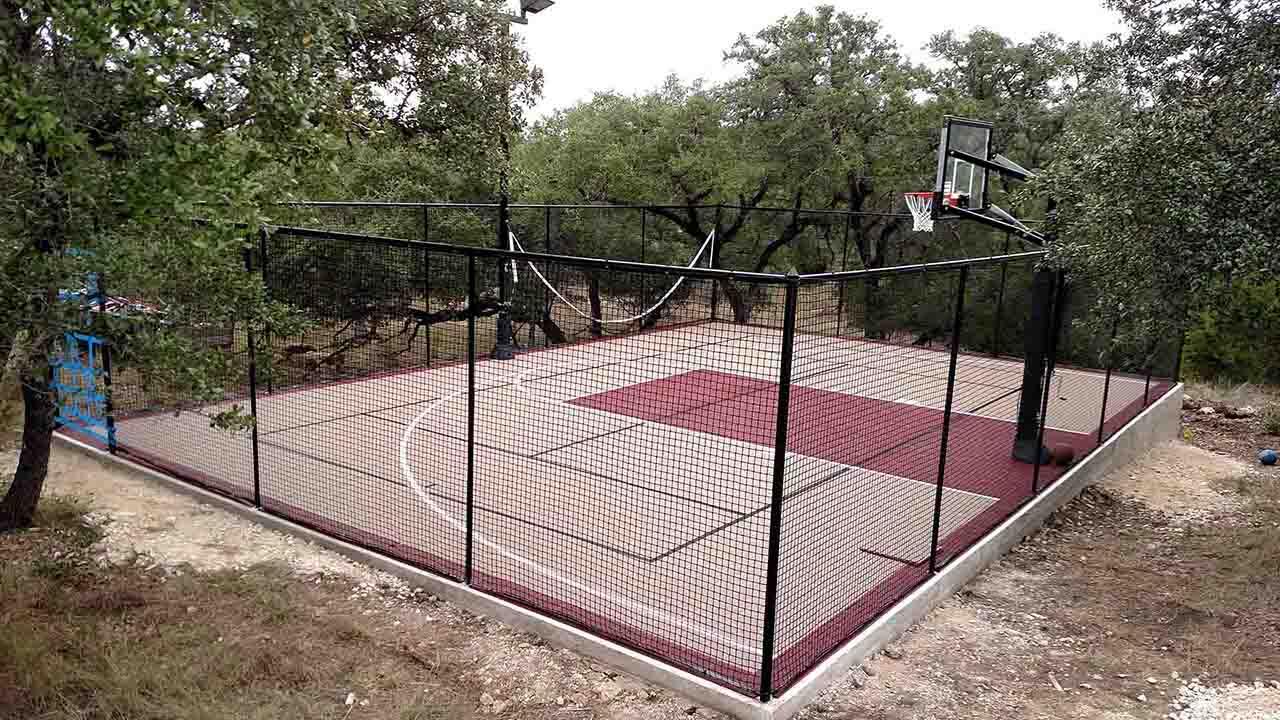
Professional Basketball Court Fencing in Houston
Complete your basketball court with professional fencing solutions that enhance safety, define boundaries, and keep the ball in play. We install chain-link, vinyl-coated, and ornamental fencing options tailored to your court layout and aesthetic preferences. Our fencing includes proper gate access, padding options for player safety, and height configurations that provide containment without obstructing views.
Basketball Court Fencing Installation in Houston, TX
Basketball court fencing serves multiple essential functions that enhance the safety, enjoyment, and longevity of your court investment. Proper fencing contains errant balls within the playing area, preventing property damage and time lost chasing balls into neighboring yards or streets. It creates a defined space that enhances the court's visual presence while providing a safety barrier that protects players and spectators. In Houston's residential neighborhoods where homes sit close together, quality fencing transforms a basketball court from a potential source of neighbor conflict into an attractive, contained recreational amenity.
Benefits of Basketball Court Fencing
Professional court fencing delivers benefits that extend well beyond simple ball containment:
Ball Retention: The primary function of court fencing is keeping basketballs within the playing area. High-quality fencing eliminates the constant interruption of chasing balls, allowing players to maintain rhythm and focus during games and practice sessions.
Property Protection: Fencing prevents balls from striking windows, vehicles, landscaping, and other property features that could be damaged by errant shots. In tight Houston lots, this protection is essential for maintaining neighbor relations.
Player Safety: Properly designed fencing provides a visual and physical barrier that helps prevent players from running off the court surface into hazards like slopes, drop-offs, or adjacent hardscaping. Safety padding on fence posts and rails adds additional protection.
Privacy: Depending on fence height and material, court fencing can provide privacy from neighboring properties, creating a more comfortable environment for family play.
Aesthetic Enhancement: Well-designed fencing frames the court space attractively, creating a resort-like feel that enhances your property's overall appearance.
Wind Protection: Solid or semi-solid fencing can reduce wind effects on play, making the court more comfortable and improving shooting conditions.
Fence Types and Materials
Several fencing options serve basketball court applications, each with distinct advantages:
Chain-Link Fencing: The most economical option, chain-link provides durable, low-maintenance ball containment. Modern vinyl-coated chain-link offers improved aesthetics compared to traditional galvanized options, with black or green coatings that blend into landscaping. Chain-link allows airflow and doesn't create significant wind resistance. However, chain-link provides less ball rebound than solid options and offers minimal privacy or wind protection.
Vinyl Privacy Fencing: Solid vinyl panels provide complete ball containment, maximum privacy, and significant wind protection. Vinyl requires minimal maintenance and won't rot, warp, or need painting. The solid surface allows aggressive play without concern for balls escaping. However, solid fencing creates wind loads that require robust posts and footings, and it eliminates visibility into and out of the court area.
Ornamental Aluminum/Wrought Iron: For upscale installations, ornamental metal fencing provides elegant aesthetics with excellent durability. These systems offer various design options from simple to elaborate and can be combined with mesh infill panels for ball containment. Metal fencing requires minimal maintenance but provides less privacy than solid options.
Combination Systems: Many installations combine different fence types—perhaps chain-link on ends where ball containment matters most and ornamental fencing along visible property lines where aesthetics are paramount.
Netting Systems: Specialized sports netting can supplement or replace traditional fencing in certain applications. Netting is lightweight, highly effective for ball containment, and allows airflow. However, netting requires regular inspection and replacement and doesn't provide the structural presence of permanent fencing.
Height Recommendations
Fence height significantly impacts functionality:
Minimum Recommended Height: 6-foot fencing provides basic ball containment for casual play but allows higher shots to escape and offers limited player protection.
Standard Residential Height: 8-foot fencing is the most common choice for residential courts, providing good ball containment for most play while remaining below typical permit and HOA height restrictions.
Competition Height: 10-foot fencing is preferred for serious players and competitive games, providing complete containment for all but the most errant shots while fully protecting players at the court perimeter.
Backstop Height: Areas behind goals where missed shots concentrate may benefit from extended height sections reaching 12-16 feet, containing the most difficult rebound angles.
Height selection balances containment needs with aesthetic considerations, local regulations, and budget. Professional consultation helps determine optimal heights for your specific situation.
Gate Options and Access
Proper gate design ensures convenient access while maintaining security:
Single Gates: Standard 3-4 foot single gates provide pedestrian access for players entering the court. Quality hinges and latches ensure reliable operation.
Double Gates: Wider double gate systems (6-8 feet) accommodate equipment access for maintenance, allow multiple players to enter simultaneously, and provide emergency access if needed.
Gate Placement: Gates should be positioned for convenient access from your home while avoiding high-traffic court areas where open gates might interfere with play.
Self-Closing Mechanisms: Spring or hydraulic closers ensure gates don't remain open accidentally, defeating the containment purpose.
Locking Options: While most residential courts don't require locks, keyed or combination locks are available when access control is desired.
Safety Padding Considerations
Safety padding transforms fence posts and rails from potential hazards into player protection:
Post Padding: Foam padding wraps around fence posts, providing cushioning for players who contact posts during aggressive play. Padding should be UV-resistant and securely attached.
Rail Padding: Horizontal rails, particularly at common contact heights, benefit from padding that prevents injuries when players run into fence structures.
Goal Post Padding: The area around basketball goal posts deserves particular attention, as players frequently contact these structures during play.
Material Options: Padding materials range from basic foam wraps to premium molded systems with durable covers. Color options allow coordination with court colors or team themes.
Aesthetic Options
Modern court fencing offers numerous aesthetic enhancements:
Color Coordination: Vinyl fencing is available in white, tan, and gray standard colors, with custom color options available. Metal fencing offers various powder coat colors to match or complement court surface colors.
Lighting Integration: Fence posts can incorporate light fixtures for court illumination, eliminating the need for separate light poles.
Windscreen Installation: Custom printed windscreens can be added to chain-link fencing, providing advertising space, team branding, or decorative patterns while reducing wind and improving ball containment.
Landscaping Integration: Fence lines can be softened with landscape plantings, creating an attractive transition between court and yard.
Permit Requirements in Houston
Fencing permit requirements vary throughout the Houston metro area:
Height Restrictions: Most municipalities limit fence heights in residential areas, typically to 6-8 feet without special permits. Taller sport court fencing may require variances or special permits.
Setback Requirements: Fence placement relative to property lines is regulated in most jurisdictions, often requiring setbacks of 6-12 inches or more.
HOA Restrictions: Many Houston neighborhoods have homeowners associations with additional fencing requirements that may be more restrictive than municipal codes.
Professional Assistance: Reputable fencing contractors handle permit research and applications as part of their service, ensuring installations comply with all applicable regulations.
Complete Your Court with Professional Fencing
The right fencing transforms your basketball court from a simple playing surface into a contained, attractive recreational destination. Explore our basketball court design services for complete court planning, or learn about lighting options to extend your playing hours.
Contact us today for a free fencing consultation and estimate for your basketball court enclosure project.
What's Included
- Chain-link fencing installation
- Vinyl-coated fence options
- Post setting and anchoring
- Gate installation with hardware
- Padding and safety features
- Height-appropriate design
- Wind screening options
- Court boundary definition
Key Benefits
- Enhanced player safety
- Ball retention in play area
- Clear court boundaries
- Property boundary definition
- Customizable aesthetics
- Reduced liability risk
Frequently Asked Questions
What height should basketball court fencing be?
Basketball court fencing height depends on the level of play, court location, and specific containment needs. For residential courts with primarily casual family use, 6-foot fencing provides basic ball containment but allows higher shots to escape. Eight-foot fencing represents the most popular choice for residential installations, containing most shots while typically complying with standard height restrictions without special permits. This height effectively contains shots from players of all ages while preventing balls from easily leaving the court area. For competitive play or courts where serious basketball training occurs, 10-foot fencing provides superior containment, handling almost all errant shots while fully protecting players at the court perimeter. Some installations incorporate variable heights, with taller sections (12-16 feet) behind goals where missed shots concentrate and standard height along the sides. Local building codes and HOA regulations may limit fence heights, typically to 6-8 feet without variances. Professional consultation helps balance containment needs with regulatory compliance to determine optimal fencing heights for your specific court.
What type of fence is best for basketball courts?
The best fence type for your basketball court depends on your priorities for containment, aesthetics, privacy, and budget. Chain-link fencing is the most economical option, providing durable, low-maintenance ball containment with minimal visual obstruction. Modern vinyl-coated chain-link in black or green offers improved aesthetics over galvanized options. Chain-link works well when airflow and visibility are desired but provides less ball rebound than solid options. Vinyl privacy fencing delivers maximum ball containment, complete privacy, and wind protection, creating a resort-like enclosure. Solid fencing requires more robust structural support to handle wind loads and eliminates visibility but is ideal for courts in tight residential settings. Ornamental aluminum or wrought iron fencing offers upscale aesthetics with excellent durability, suitable for high-end installations where appearance matters greatly. These can be combined with mesh infill for ball containment. Combination systems using different fence types for different court sides often provide the best balance—perhaps solid fencing along the property line for privacy and chain-link on ends for visibility and cost savings. Professional consultation evaluates your specific needs and site conditions to recommend the optimal fence type.
Do I need a permit for court fencing in Houston?
Permit requirements for basketball court fencing in the Houston area vary by municipality and specific project details. Most cities and counties within the metro area require permits for fences exceeding certain heights, typically 6-8 feet. Sport court fencing often exceeds standard height limits and may require building permits, variances, or special use permits depending on local regulations. Setback requirements from property lines are commonly regulated, with most jurisdictions requiring fences to be installed 6-12 inches inside property lines. Many municipalities restrict fence heights in front yards more strictly than side or rear yards, which may affect court fencing placement on certain lots. Homeowners associations (HOAs) add another layer of requirements—many Houston neighborhoods have HOA covenants restricting fence types, heights, colors, or materials that may be more stringent than city codes. Professional fencing contractors typically handle permit research and application as part of their service, ensuring installations comply with municipal codes, HOA requirements, and any deed restrictions. The permit process usually involves submitting fence plans, paying permit fees, and scheduling inspections during or after installation.
Related Services
Basketball Court Design
Custom basketball court design services tailored to your space, budget, and playing style in Houston, TX.
Basketball Court Construction
Complete basketball court construction from ground preparation to final surfacing in Houston, TX.
Basketball Court Resurfacing
Restore worn basketball courts with professional resurfacing, crack repair, and new coating systems.
Ready to Get Started?
Contact us today for a free consultation and quote for your basketball court fencing project.