
Basketball Court Drainage Solutions in Houston, TX
Expert drainage solutions to prevent water damage and ensure year-round playability.
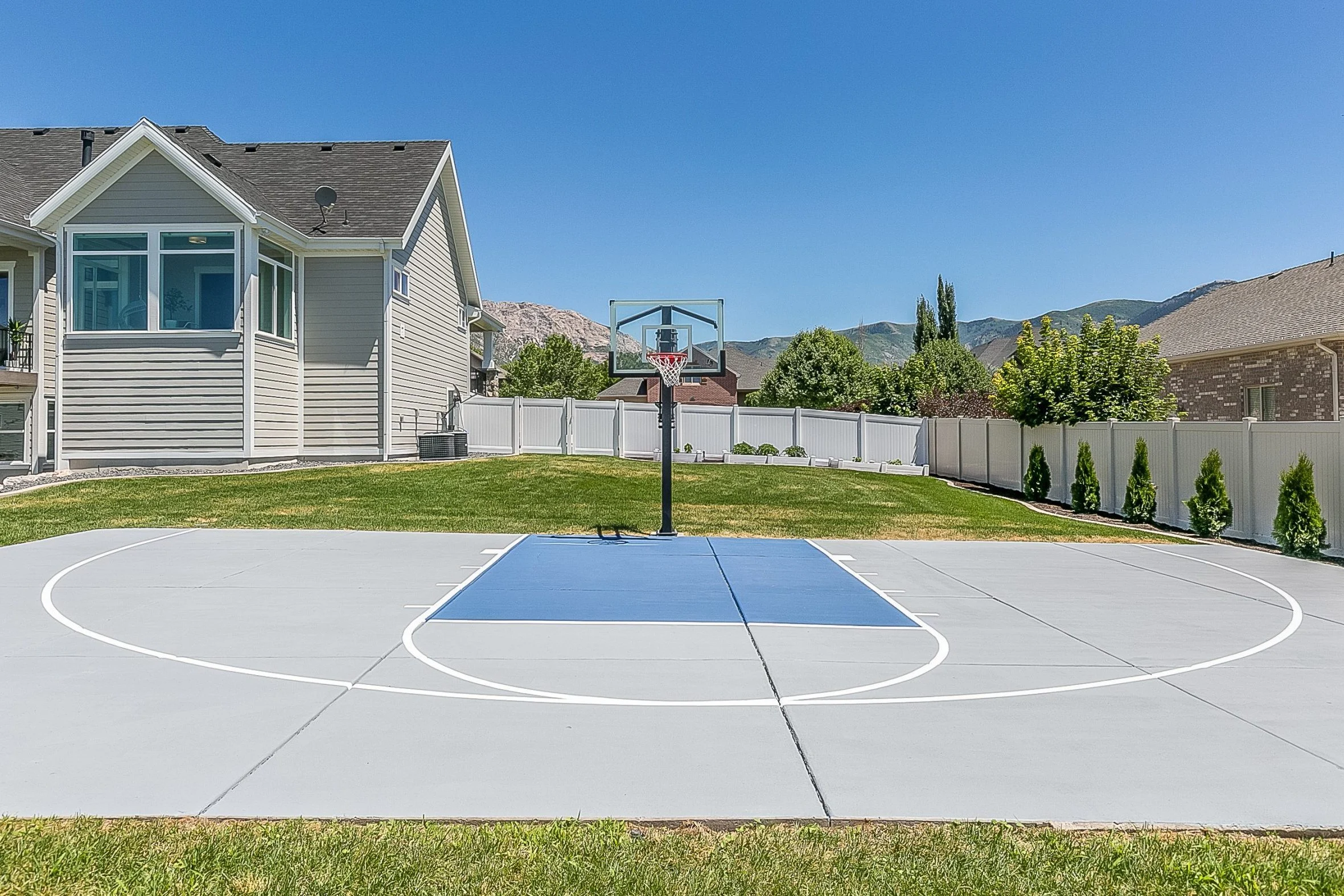
Professional Basketball Court Drainage in Houston
Houston's heavy rainfall demands proper drainage for basketball courts. Our drainage solutions prevent water accumulation, surface erosion, and structural damage through French drains, channel drains, permeable base materials, and strategic grading. We assess your site's water flow patterns and install integrated drainage systems that keep your court dry and playable even after Texas-sized storms.
Basketball Court Drainage Solutions in Houston, TX
Water is the single greatest threat to basketball court longevity, and nowhere is this more true than in Houston, where heavy rainfall, high water tables, and expansive clay soils create perfect conditions for water damage. Proper basketball court drainage isn't an optional add-on—it's an essential component of any quality court installation. Without effective water management, even the best-constructed courts will suffer from premature cracking, surface deterioration, and structural failure. Professional drainage solutions protect your investment by ensuring water moves away from and off of your court surface efficiently, regardless of weather conditions.
Why Drainage is Critical in Houston
Houston presents unique drainage challenges that make professional water management essential:
Heavy Rainfall: The Houston area receives approximately 50 inches of rain annually, often concentrated in intense thunderstorms that dump significant water in short periods. Courts without adequate drainage quickly become overwhelmed, leading to standing water that damages surfaces and creates safety hazards.
Expansive Clay Soils: The clay-rich soils prevalent throughout Houston expand when wet and shrink dramatically during dry periods. This soil movement creates tremendous stress on rigid court surfaces, causing cracking and heaving that destroys court playability. Proper drainage helps stabilize soil moisture levels, reducing the severity of expansion-contraction cycles.
High Water Tables: Many Houston neighborhoods, particularly those near bayous or in low-lying areas, have high water tables that keep subsoils saturated. Without drainage systems to intercept and redirect this water, hydrostatic pressure can damage court foundations from below.
Hurricane and Tropical Storm Events: Periodic extreme weather events can deliver rainfall measured in feet rather than inches. While no drainage system can handle the most extreme events, properly designed systems manage typical heavy rainfall and help courts recover quickly after severe weather.
Urban Runoff: As Houston development continues, increased impervious surfaces direct more runoff onto properties. Court drainage systems must handle not just direct rainfall but potentially significant contributions from adjacent surfaces.
Types of Drainage Systems for Courts
Professional court drainage employs multiple strategies working together:
Surface Grading: The first line of defense, proper surface grading ensures water flows off the court rather than pooling. Courts should slope 1-2% toward drainage collection points, with smooth transitions that don't affect play.
Perimeter Drainage: French drains or trench drains installed around court edges collect water flowing off the surface and intercept groundwater moving toward the court. These systems consist of perforated pipe surrounded by gravel and filter fabric, installed in trenches that direct water to appropriate discharge points.
Sub-Surface Drainage: For courts in areas with high water tables or significant groundwater movement, sub-surface drainage systems beneath the court base intercept water before it reaches the playing surface. These systems require careful installation during initial construction but provide exceptional protection.
Channel Drains: Surface channel drains at low points or court edges collect concentrated flow and direct it to storm drainage systems. These are particularly useful where courts meet other hardscaping or where grading constraints create collection points.
Dry Wells and Infiltration Systems: Where connection to storm sewers isn't possible, dry wells and infiltration trenches provide underground storage that slowly releases water into surrounding soil. These systems must be designed carefully to avoid simply moving the drainage problem elsewhere.
Sump Pump Systems: For courts in particularly challenging locations, sump pump systems actively remove water that collects in drainage collection points. While requiring electricity and maintenance, pumps provide drainage capacity impossible to achieve with gravity alone.
French Drains vs. Channel Drains
Two of the most common drainage solutions serve different purposes:
French Drains are buried systems designed primarily for groundwater management. A French drain consists of a perforated pipe surrounded by gravel and wrapped in filter fabric, installed in a trench that collects water from the surrounding soil and directs it to a discharge point. French drains are largely invisible once installed and excel at managing the soil moisture that causes expansion problems in clay soils. They're typically installed around court perimeters and beneath the sub-base in high water table areas.
Channel Drains are surface-mounted systems that collect water flowing across the surface. A channel drain consists of a linear grate over a trough that captures water and directs it to underground drainage. Channel drains are visible but can be integrated aesthetically into court design. They're ideal for capturing water at court edges, across walkways, or where concentrated flow occurs.
Many quality court installations use both systems—French drains to manage subsurface moisture and channel drains to handle surface runoff.
Grading and Slope Requirements
Proper grading is fundamental to effective drainage:
Surface Slope: Basketball court surfaces should slope between 1% (1/8 inch per foot) and 2% (1/4 inch per foot) toward drainage collection points. Slopes less than 1% don't move water effectively; slopes greater than 2% become noticeable during play and may affect ball roll.
Sub-Base Grading: The sub-base beneath the court must also be graded to direct any water that penetrates the surface toward drainage systems. This creates a drainage path beneath the concrete that prevents water accumulation.
Perimeter Grading: Areas immediately surrounding the court should be graded to direct runoff away from rather than toward the court surface. Swales or berms may be needed to manage water from uphill areas.
Discharge Grading: Drainage discharge points must be positioned where water can flow away from the court and other structures without creating new problems. Discharge to daylight (surface outlet) is preferred where grade permits.
Professional grading design balances drainage requirements with playability concerns, ensuring courts drain effectively without slopes that affect the game.
Integration with New and Existing Courts
Drainage solutions vary depending on whether they're part of new construction or retrofitted to existing courts:
New Court Installations: Drainage is designed as an integral part of the court system. Excavation provides access for comprehensive drainage infrastructure, including sub-surface systems impossible to install after construction. Drainage capacity is matched to the specific site conditions identified during pre-construction analysis.
Existing Court Retrofits: Adding drainage to existing courts presents challenges but is often possible and worthwhile. Perimeter French drains can be installed around court edges without disturbing the playing surface. Surface channel drains can be cut into existing concrete at strategic locations. Grading improvements may require partial reconstruction but can dramatically improve drainage performance. In severe cases, the court may need to be removed and reconstructed with proper drainage, but many existing courts can be helped with less invasive approaches.
Signs Your Court Has Drainage Problems
Recognizing drainage issues early allows for corrective action before major damage occurs:
- Standing Water: Water remaining on the court surface hours after rainfall indicates inadequate surface slope or blocked drainage
- Efflorescence: White mineral deposits on the surface indicate water moving through the concrete from below
- Premature Cracking: Patterns of cracking following control joints or radiating from low points suggest water-related stress
- Spalling and Pitting: Surface deterioration in low-lying areas results from water pooling and freeze-thaw cycling
- Moss and Algae Growth: Persistent biological growth indicates chronic moisture problems
- Heaving or Settlement: Uneven court surfaces result from soil movement caused by moisture changes
Protect Your Court Investment
Proper drainage is the foundation of court longevity in Houston's challenging environment. Don't let water destroy your basketball investment. Explore our basketball court construction services for new installations with integrated drainage, or learn about maintenance programs to keep your drainage systems functioning properly.
Schedule a drainage assessment today and discover how professional water management can extend your court's lifespan by decades.
What's Included
- Site water flow analysis
- French drain installation
- Channel drain systems
- Permeable base construction
- Grading and slope correction
- Catch basin installation
- Storm water management
- Erosion control measures
Key Benefits
- Prevents water damage
- Faster court drying time
- Reduced surface cracking
- Extended court lifespan
- Year-round playability
- Protection of investment
Frequently Asked Questions
Why does my basketball court hold water?
Basketball courts hold water due to several common drainage failures. Surface grading problems are the most frequent cause—the court may have been constructed without adequate slope, settlement may have created low spots over time, or expansion of underlying clay soils may have deformed the surface profile. Drainage system failures including clogged French drains, blocked channel drains, or failed discharge points prevent water from exiting the court area as designed. Sub-base issues such as improper compaction during construction, contamination of drainage stone with soil, or crushed drainage pipes can eliminate the drainage path beneath the court. Surrounding grade problems occur when landscaping changes, construction activity, or natural settlement alter the drainage patterns around the court, directing water onto rather than away from the surface. In some cases, high water tables or underground springs create hydrostatic pressure that pushes water up through the court from below. A professional drainage assessment can identify the specific causes affecting your court and recommend targeted solutions to restore proper drainage function.
Can drainage be added to an existing court?
Yes, drainage improvements are often possible for existing basketball courts, though the approach depends on the court's specific conditions and construction. Perimeter French drains can frequently be installed around existing court edges without disturbing the playing surface—trenches are excavated beside the court, drainage pipe and gravel are installed, and the area is restored with sod or landscaping. Surface channel drains can be cut into existing concrete at low points or court edges, creating collection points where water can be captured and directed away. Grading modifications may be possible through concrete grinding in high spots or targeted repairs in low areas, though significant grading changes typically require reconstruction. Sub-surface drainage installation beneath existing courts is challenging and usually requires removing and replacing at least portions of the court. In cases where existing drainage is completely inadequate or the court base has failed, complete reconstruction with proper drainage may be the most cost-effective long-term solution. A professional assessment determines which approaches are feasible for your specific court and provides cost-benefit analysis of different options.
How much slope does a basketball court need?
Basketball courts require careful slope balance—enough to drain water effectively but not so much to affect play. Industry standards recommend a slope between 1% and 2% (1/8 inch to 1/4 inch per foot) toward designated drainage points. This range provides adequate water movement without creating noticeable grades that affect ball roll or player perception. Courts should slope consistently toward edges or corners where drainage collection systems are located, avoiding complex contours that create low spots. The slope should be uniform across the court surface—areas with steeper grades mixed with flatter sections create problems with both drainage and playability. When designing for drainage, professionals consider the total elevation change across the court—a regulation full court at 1% slope has approximately 9 inches of elevation difference from one end to the other, which is manageable, while steeper slopes become more noticeable. Subtle slopes in the 1-1.5% range are generally preferred for residential courts where playability is paramount, while courts in particularly wet areas might use the full 2% slope to ensure positive drainage.
Related Services
Basketball Court Design
Custom basketball court design services tailored to your space, budget, and playing style in Houston, TX.
Basketball Court Construction
Complete basketball court construction from ground preparation to final surfacing in Houston, TX.
Basketball Court Resurfacing
Restore worn basketball courts with professional resurfacing, crack repair, and new coating systems.
Ready to Get Started?
Contact us today for a free consultation and quote for your basketball court drainage project.